The BossMom Podcast · Business Mastery
She Replaced Her Teaching Salary in Five Months as a New Mom (with Laura Jennings)
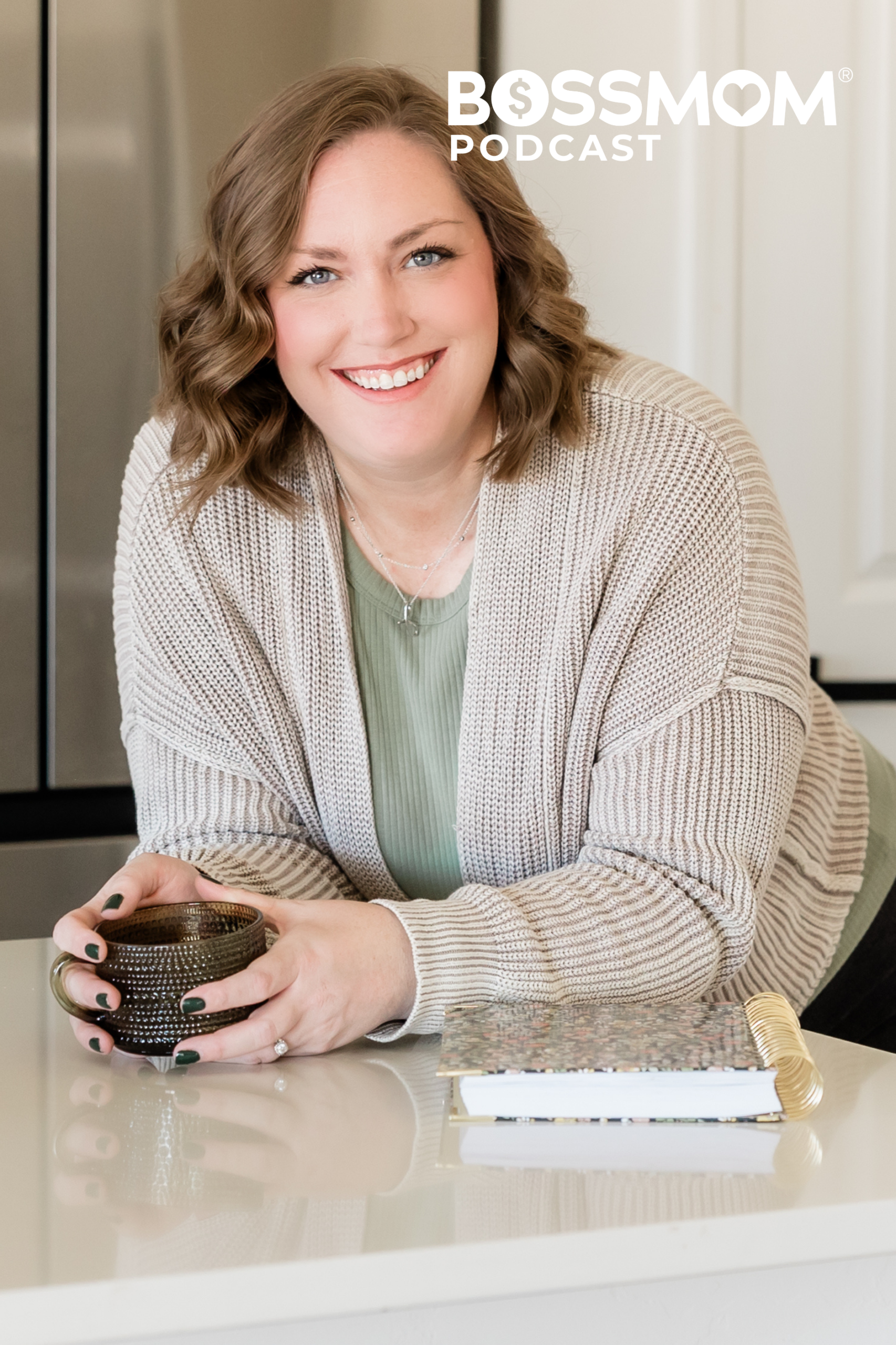 Hey, beautiful boss mom. Pull up a chair.
I want to tell you about a conversation I had recently that genuinely got me fired up — in the best way. Laura Jennings came on the show, and we ended up going deep on something I think every mom needs to hear: there is a path to income that works around your life, your kids, and the version of yourself you’re still figuring out after becoming a mom. And it doesn’t require going back to school, getting a certification, or overhauling everything you’ve built.
Laura replaced her college professor salary in five months as a brand new virtual assistant. Her daughter never had to go to daycare. Within two years she had tripled her income.
If that sounds like too good to be true, I want to talk to you about that feeling — because Laura had it too.
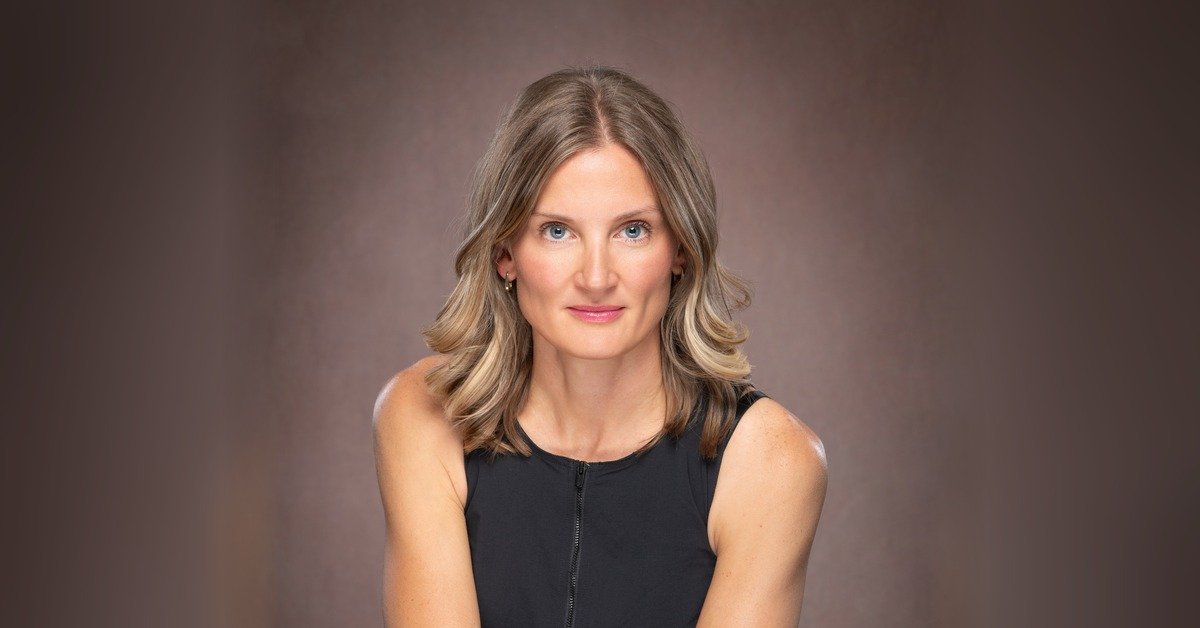
About the Guest: Laura Jennings
Laura Jennings is a former professor and restaurant manager turned six-figure VA and coach. She now teaches moms how to earn income from home through the Superstar Assistant Academy, and over 1,200 women have used her approach to land clients and start making money in small pockets of time.
She has a free “Get Started as a Virtual Assistant” masterclass that walks you through exactly what you could offer as a VA and how it could realistically fit your life. You can grab it at laurajtraining.com/masterclass-registration-guest-podcast.
Her podcast, Your Virtual Assistant Coach, is a great companion resource — episodes run 8 to 15 minutes, so they’re completely mom-sized.
The Thing Nobody Told Us Was an Option
Laura grew up doing what most of us were taught to do. Go to school. Get the degree. Do the job. She got her master’s degree, became a college professor, and worked hard. Then her daughter arrived, and when Laura went back to campus at five months postpartum, something shifted.
“It was one thing for my schedule to affect my life and my husband’s life and my dog’s life. But now that it’s affecting this tiny human, I was like — I don’t love this anymore.” — Laura
But staying home wasn’t an option either. They needed income. And Laura loves to work.
A friend suggested she try being a virtual assistant. Laura’s response was essentially: what on earth is that?
She had been a restaurant manager and a professor. She couldn’t imagine how those skills translated. Her friend told her to trust the process. She did. And five months later, she had replaced her teaching salary. A year after that, she’d doubled it.
The thing that gets me about this story is not how fast it happened. It’s that Laura spent over a year waiting for the other shoe to drop. She kept her teaching job all the way through spring of 2021 — almost a full year after she’d already replaced her salary — because she couldn’t quite believe it was real.
“How in the world is this client paying me $4,000 a month to do this super simple stuff from my computer at home with my daughter sleeping on my chest? This doesn’t add up.” — Laura
That’s not a confidence problem. That’s what happens when something is completely outside your frame of reference for how the world works. It’s what I call your stages of norm. Something isn’t real to you until you’ve stacked enough evidence that it becomes your new normal.
“Too Good to Be True” Is Just a Stage
One of the things Laura and I talked about at length was imposter syndrome — and specifically why it hits so hard when you’re switching lanes into something that looks nothing like what you were trained for.
The antidote isn’t waiting until you feel ready. It’s taking action so you can build the evidence.
“Clarity comes from taking action. When you just sit in the overthinking and the worrying, all you’re gonna do is doubt yourself even more.” — Laura
Her mindset coach talks about the ladder of believability. Every small win you stack is a rung. Every client you land, every task you complete well, every paycheck that hits — you climb higher. The imposter syndrome doesn’t disappear overnight, but you stop listening to it as much because you’ve got real proof stacking up underneath you.
If you’re sitting on the edge of something right now and it feels too good to be true, that feeling isn’t a sign to stop. It’s a sign that you’re about to step outside what you’ve been told is possible.
You’re Not Starting Over. You’re Switching Lanes.
Here’s something Laura says to every mom who comes into her world: you’re not starting over. You’re switching lanes.
This is the part I want every mom who’s been a paralegal, a nurse, a teacher, a manager, a customer service rep — anyone who thinks her old career doesn’t translate — to hear. (And if you’re still in the early stages of figuring out what that could even look like, this roundup of work from home career ideas for moms is a great place to start.)
Your skills aren’t irrelevant. They’re just waiting to be rebranded.
Laura gave the example of a paralegal who assumed her only option was to work with lawyers. But when Laura asked her what she actually enjoyed, she said CrossFit and counting macros. So they mapped her paralegal skills — organization, attention to detail, managing complex information — onto the world of online fitness and macro coaching. Same brain. Completely different environment. And now she’s working with people she’s genuinely excited about.
“You don’t have to stay in this box. We get to use our brains differently doing this.” — Laura
For moms who’ve been stay-at-home and feel like they have nothing to offer: you have more than you think. The organizational skills, the project management, the communication, the ability to hold seventeen things in your head at once — that is legitimately valuable to a business owner who’s drowning in their own to-do list. (Honestly, moms have some of the best time management skills on the planet — we’ve just never been told to put that on a resume.)
Your Ideal Client Is Not “Anyone Who’ll Pay Me”
When moms first start as VAs, they almost universally say the same thing: I’ll work with anyone. Which makes sense — you’re scared, you feel underqualified, and you’re just trying to land something.
But Laura pushes back on this immediately, and I love her for it.
Niching down doesn’t eliminate opportunity. It focuses it. And more importantly, it protects your energy and your enjoyment of the work.
“We don’t do this so you can substitute a job you’re miserable in for a job at home that you’re miserable in.” — Laura
She asks her students to think about their ideal client the way they’d think about a dating profile. Not just what industry they’re in, but who they are as a person. How do they communicate? Do they micromanage or give big picture and let you fly? What are they passionate about? Because when you’re aligned with your clients on a human level, you end up with relationships that last years — not the hustle of hopping project to project.
Laura has had a client for over five years. Another for three and a half years. That kind of sustainability doesn’t happen by accident. It happens when you’re selective.
What Does AI Mean for VAs? (The Real Answer)
We hear this question constantly right now: is AI going to replace virtual assistants?
Laura’s answer is a clear no — and here’s the nuance that I think matters.
AI needs a human to prompt it, give it feedback, and check its output. It makes things up. It misses context. It produces results that someone who actually knows the client, the brand, and the industry has to review and refine. (If you want to go deeper on how to actually use AI as a tool in your business rather than a replacement for your thinking, this breakdown of AI-powered marketing strategy for boss moms is worth a read.)
“As the virtual assistant, we can use AI to streamline our own processes and make our work more efficient — go a lot faster, lift that mental load. But it’s not ever going to replace us.” — Laura
What this actually means for moms considering the VA path right now: the skill that’s becoming most valuable isn’t doing the task. It’s knowing whether the output is good. Discernment. Editing. Judgment. The human knowing what “right” looks like — that’s where the irreplaceable value is.
And there’s a bigger picture here too. As AI handles more internal functions, companies are increasingly moving away from full-time employees in many areas of the business. That means more contract work. More need for skilled, flexible people who can deliver results on their own schedule.
Moms with ten to twenty hours a week are not a limitation in this market. They’re exactly what’s needed.
The Identity Shift Nobody Warns You About
This is the part of the conversation that got me the most, honestly.
Laura talked about how becoming a mom didn’t just change her schedule. It changed her identity at a cellular level. Her husband, eleven years into their marriage, looked at her recently and said: “I love you more than ever, but you’re not the same woman.”
He’s right. She’s not. And neither are you.
The problem is nobody tells you that’s coming. You assume you’ll have a baby and still want the same things, the same career, the same trajectory. And then the baby arrives and something shifts — sometimes immediately, sometimes when they start kindergarten, sometimes somewhere in between — and suddenly the thing you were building toward doesn’t feel like enough justification for the hours it takes you away. Life has a way of reshuffling your priorities whether you planned for it or not, and keeping a business running when life gets hard is something every mom building something needs a framework for.
“Now my first identity is mom. And then everything else functions around that.” — Laura
That’s not a failure. That’s a recalibration. And the VA path, or any flexible, home-based business model, is one of the few structures that actually honors that recalibration instead of forcing you to choose between your ambition and your presence.
Laura’s daughter thinks she’s a stay-at-home mom. She’s also running a six-figure business. Both things are true at the same time.
My own kids have watched me work their whole lives. My son is almost thirteen and he still comes into my office occasionally, just to be goofy for thirty seconds and leave. Those are the moments I would have missed if I’d been commuting to an office. Those are the moments the flexible work model protects.
The Model Moms Are Building for the Next Generation
Here’s what I keep coming back to after this conversation.
The girls growing up right now — Laura’s six-year-old, my kids who are tweens — are watching us. They’re not growing up in a world where the only options are “stay home and give up your ambitions” or “go to work and give up your presence.” They’re watching their moms do both, imperfectly, on their own terms.
Laura’s daughter is already asking if she can sell the beaded necklaces she makes. Not “can I get a job someday.” Can I sell something I made?
That’s the model. And we’re building it right now, whether we realize it or not.
Your Next Step
If this conversation stirred something in you — if the VA path is something you’ve been curious about — Laura has a free masterclass that walks you through exactly what you could offer and whether this is a realistic fit for your life and income goals. No fluff, no pressure. Go check it out at laurajtraining.com/masterclass-registration-guest-podcast.
And wherever you are in figuring out what your next move looks like:
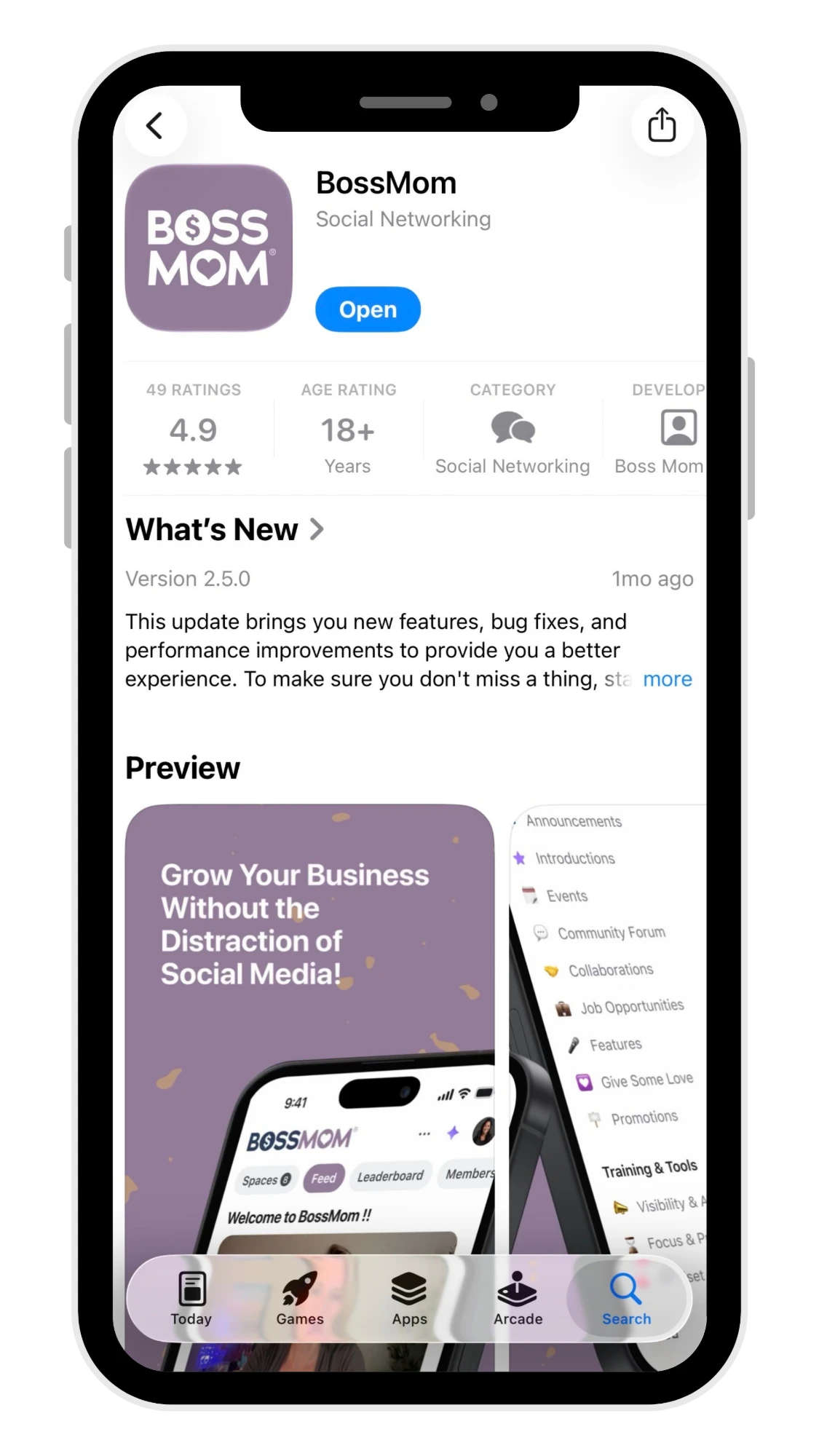
Come into the free BossMom community. This is not just a place to hang out. It’s where we actively help you clarify what you want, build the focus skills to actually go after it, and connect with other moms who are doing business differently because they have limited time and refuse to let that be the reason they stop. Free networking events, mindset workshops, daily mindset audios, and a dedicated app that lives completely off social media. It’s free. Come hang out.
When you’re ready to go deeper, BossMom+ is where we build. This is the level where we put together the right marketing plan for your specific business and give you the ongoing support to actually implement it so you hit your financial goals.
You already have the skills. You just need to see them differently.
I’ll see you next week.
xo, Dana