Market Research Groups Are Your Business’ Secret Weapon

You know that feeling when you have an idea that feels absolutely golden—but you’re terrified nobody will actually care? Maybe it’s a podcast concept that’s been rattling around in your head for months. A product you’re convinced your audience needs. A service that could change everything for your clients. You’re excited. You’re motivated. But you’re also completely paralyzed by one question: “What if I build this and nobody shows up?”
Here’s what most entrepreneurs do: They spend months perfecting their idea in secret. Building the thing. Creating all the content. Designing the perfect launch sequence. And then they release it into the world with fingers crossed, hoping someone—anyone—will care.
Then reality hits. Crickets. Lukewarm responses. A handful of sympathy purchases from friends. And the crushing realization that you just spent months building something the market doesn’t actually want.
There’s a better way. And it’s so simple that most people skip right over it: Ask your people what they want before you build it.
Why Market Research Groups Are Your Cheat Code
Market research groups aren’t some corporate, complicated thing reserved for big brands with massive budgets. They’re simply spaces where you can test ideas, gather feedback, and refine your offers before you officially launch.
Think of it as having a focus group that’s genuinely invested in your success. These aren’t random strangers being paid to fill out surveys. These are your actual ideal clients telling you exactly what they need, what they’ll pay for, and what will make them hit “buy” without hesitation.
The beauty? You’re not guessing anymore. You’re not hoping your launch will work. You’re building with certainty because you’ve already validated the idea with real people who represent your target market.
One of my clients used this exact approach to launch her podcast—and the difference between her experience and the typical “launch and pray” method was night and day. Let me walk you through exactly how she did it, so you can use the same strategy for whatever you’re planning.
How to Build Your Market Research Group (Without Making It Complicated)
Starting a market research group sounds like it should be harder than it actually is. But here’s the truth: If you can create a Facebook group or Slack channel and show up consistently, you can do this.
Here’s the framework that worked:
Step 1: Get Crystal Clear on Who You’re Talking To
My client’s market research group was specifically for working Christian moms. Not just “moms.” Not just “Christians.” Not just “working women.” The intersection of all three.
This specificity is everything. When you know exactly who you’re serving, you can create posts, spark conversations, and share resources that feel personally relevant to each member. They think “This is for me” instead of “This might be for me.”
Take the time to define your group with precision. Who are they? What do they care about? What challenges are they facing? What values do they share? The tighter your definition, the stronger your community.
Step 2: Give Value First (And Keep Giving)
Before my client ever mentioned her podcast idea, she spent weeks showing up consistently with genuine value. She shared insights, answered questions, created supportive conversations, and built real relationships with her members.
This is where most people mess up. They create a group, immediately start asking for feedback on their offers, and wonder why nobody engages. You can’t extract value from a community you haven’t invested in first.
Build trust by being genuinely helpful without expecting anything in return. When you eventually do ask for feedback or support, your group will be excited to give it because you’ve already proven you’re not just there to sell to them.
Step 3: Facilitate Real Conversations (Not Just Broadcasting)
The magic happens when your group becomes a place where people actually talk to each other—not just respond to your prompts.
Sometimes all it takes is asking: “What’s the biggest challenge you’re facing right now?” Then actually listening to the responses. Following up. Asking clarifying questions. Creating space for members to help each other.
These organic conversations will reveal insights you never would have discovered through formal surveys. You’ll hear the exact language your audience uses to describe their problems. You’ll understand their frustrations at a deeper level. You’ll spot patterns that inform everything from your messaging to your offers.
When you build community around shared interests and values, you create a group of people who are already invested in your success—because they helped shape what you’re creating.
Testing Ideas Without the Risk
Once her community was thriving, my client started casually mentioning her podcast concept. Not with a formal pitch. Just genuine curiosity about what resonated.
She paid attention to which topics got people excited. What format they preferred. What they were already consuming and what felt missing in the market.
Their reactions helped her refine everything: the podcast structure, the topics she’d cover, even the tone and style of delivery. By the time she was ready to launch, she knew exactly what her audience wanted because they’d told her explicitly.
This eliminates so much wasted effort. Instead of creating content you think people want, you’re creating content you know they want because they’ve already told you.
We actually have 63 questions designed for market research that help you create engagement and gather exactly the insights you need across different industries. These aren’t generic “what do you think?” questions—they’re strategic prompts that reveal what your audience will actually pay for.
Designing Your Strategy Based on Real Feedback
The feedback from her group directly shaped my client’s podcast format. She went with a conversational interview style—similar to what we do on the Boss Mom Podcast—because that’s what her community already loved and responded to.
When you’re planning your own content or offers, here’s what to pay attention to:
Format and frequency matter. Does your audience want short, weekly episodes they can consume during school pickup? Or do they prefer longer, monthly deep-dives they can really sink into? Do they love interviews with diverse perspectives, or do they want your solo expertise?
Let them choose the topics. You might think you know what they need, but listen to what they’re actually asking for. The topics that generate the most discussion in your group? Those are your winners.
Watch for the emotional resonance. It’s not just about which topics get comments—it’s about which ones spark passionate responses. Where do people get vulnerable? What makes them say “I thought I was the only one”? That’s where your content gold lives.
Launching to People Who Are Already Sold
Here’s one of the most underrated benefits of having a market research group: By the time you’re ready to launch, you already have an audience that’s excited and ready to support you.
These aren’t cold leads you’re trying to convince. These are warm connections who’ve watched you develop the idea, contributed their input, and feel ownership over what you’re creating. They want you to succeed because your success validates their feedback.
My client shared her podcast plan with her group first. They became her initial listeners, her first reviewers, her earliest advocates. Launching to a warm audience of people who already believe in what you’re doing? That’s the difference between struggling for traction and having momentum from day one.
And here’s the thing about podcasting specifically—or any vulnerable creative work: It’s not just about going live. It’s about opening up, connecting authentically, and trusting your message will resonate. When you share the hard stuff—not just the highlight reel—that’s when real connection happens.
If you’re considering launching something, ask yourself: “What part of my journey could genuinely connect with others?” Usually, it’s the messy, imperfect parts that people relate to most.
The Soft Launch Strategy That Builds Real Momentum
Once my client had validated her concept with her market research group, she moved to the next phase: her email list.
She didn’t just announce “My podcast is live!” She introduced the first three episodes with context. Explained what each one was about. Made it clear why she created this and who it would help. And then—crucially—she asked specifically for support.
Subscribe. Leave a review. Share with someone who needs to hear this.
Her email list responded enthusiastically because the ask was clear and actionable. They knew exactly how to help, and they wanted to because she’d given them a reason to care.
Here’s the lesson: Don’t be vague about what you need. When you clearly ask your community to take specific actions—and you make those actions easy—people are usually happy to help. But “I’d love your support” doesn’t tell anyone what to actually do. “Subscribe on Apple Podcasts and leave a review if it resonates” does.
The Phased Launch That Creates Sustainable Growth
After the email list launch gave her initial momentum, my client kept the podcast relatively quiet for a bit longer. She let early listeners discover it organically. The reviews started coming in. The download numbers grew steadily.
Then she went fully public: Announced it in her Facebook group and other communities. Eventually shared it on her main social channels. Reached out to strategic partners who might promote it to their audiences.
This phased approach does something important: It builds genuine momentum instead of artificial hype. You’re not trying to manufacture virality on day one. You’re creating sustainable growth by expanding in intentional waves.
The strategy: Share with your core group first (your market research community). Then your email list. Then broader communities where you’re already known. Then your wider social media following. Then strategic partnerships.
Each phase validates the previous one. Each expansion brings new people while maintaining the authentic foundation you built.
Setting Goals That Actually Mean Something
For my client, simply launching the podcast was a massive win. But she also set specific benchmarks: 60 ratings and reviews by the end of May. 10,000 downloads per episode within a year.
But here’s what matters most about her approach: She’s not letting the metrics consume her. She’s focusing on showing up consistently, connecting authentically, and serving her audience well. The numbers are goals, not validation of her worth.
This perspective matters because it’s easy to get caught in the comparison trap. To obsess over download counts or follower numbers. To feel like you’re failing if you’re not immediately hitting arbitrary benchmarks.
But here’s the reframe: Each download isn’t just a number. It’s a real person taking time out of their day to listen to what you have to say. Each review is someone who cared enough to leave feedback. That’s something worth celebrating regardless of whether you hit your goal or not.
Set realistic, motivating goals that push you forward. But don’t lose sight of what those metrics actually represent—human connection and genuine impact.
Embracing Imperfection From Day One
My client hit a snag immediately: Her first episode was recorded in Zoom, which doesn’t deliver great audio quality for solo podcasting. Her producer flagged it. She could have re-recorded (which apparently took “about 95 tries” the first time around).
Instead? She added a brief message at the start explaining the audio situation and moved forward.
This is the mindset shift that separates people who actually launch from people who stay stuck in endless preparation: Done beats perfect. Always.
If you’re waiting until everything is flawless before you share your work, you’ll never launch. There will always be something to fix, improve, or refine. At some point, you have to trust that your message matters more than perfect production quality.
Your audience isn’t grading you on technical perfection. They’re looking for value, connection, and authenticity. Start before you feel ready. Improve as you go. Let your early work be imperfect.
Keeping the Focus on People, Not Metrics
On her first day live, my client reached 75 people. Not 7,500. Not 75,000. Just 75.
And she was genuinely proud and grateful for every single one.
This perspective is everything. In a world obsessed with viral growth and massive numbers, it’s easy to feel like you’re failing if you’re not immediately reaching thousands. But 75 people chose to spend their time with her content. That’s 75 real humans who decided her message was worth their attention.
If you’re building something, remember: Every follower, listener, customer, or community member represents a real person. They have lives, problems, hopes, and needs. When you focus on serving them well instead of just growing the numbers, your work stays grounded and meaningful.
The growth will come if you stay consistent and keep delivering value. But even if it grows slowly, you’re still making a real impact on real people. That’s not failure—that’s success at a human scale.
Staying True to What Actually Matters
My client’s ultimate goal isn’t hitting download benchmarks or becoming podcast-famous. It’s impacting her listeners. Sharing her faith journey authentically. Offering encouragement to women who need it.
She’s not letting herself get caught up in comparison or vanity metrics. By staying focused on her mission and connecting genuinely, she trusts the growth will follow naturally.
This is the antidote to burnout and disillusionment: Keep it personal. Remember why you started. Stay connected to the impact you’re making, not just the metrics you’re tracking.
Whatever you’re working on—a podcast, a blog, a business, a new offer—try to maintain that human focus. Embrace the small, meaningful steps. Celebrate the connections. Trust that if you serve people well, everything else will follow.
The Framework That Makes Launching Feel Easier
Here’s the simple process my client used—and that you can replicate for anything you’re planning to launch:
- Build your community first. Create a space for your ideal clients and show up with consistent value before you ask for anything.
- Test your ideas casually. Share concepts, gauge reactions, and refine based on real feedback from real people.
- Design based on what they actually want. Let your audience shape your offers instead of guessing what they need.
- Launch in phases. Start with your core community, expand to your email list, then go fully public. Build momentum gradually instead of trying to force virality.
- Focus on connection over perfection. Launch before you’re ready. Improve as you go. Keep the focus on serving people, not hitting arbitrary metrics.
- Stay true to your mission. Let the impact guide you, not the numbers.
This isn’t complicated. It just requires patience, consistency, and the willingness to actually listen to what your audience tells you they want.
Stop Guessing and Start Asking
The biggest mistake entrepreneurs make is building in isolation. Creating offers based on assumptions. Launching without validation. Then wondering why nobody buys.
Market research groups solve this problem completely. You’re not guessing anymore—you’re building with certainty because you’ve already confirmed your audience wants what you’re creating.
If you’re sitting on an idea right now, unsure if it’ll resonate, the answer isn’t to keep overthinking it. The answer is to ask your people. Create a space where you can test concepts, gather feedback, and refine your approach before you invest months building something nobody wants.
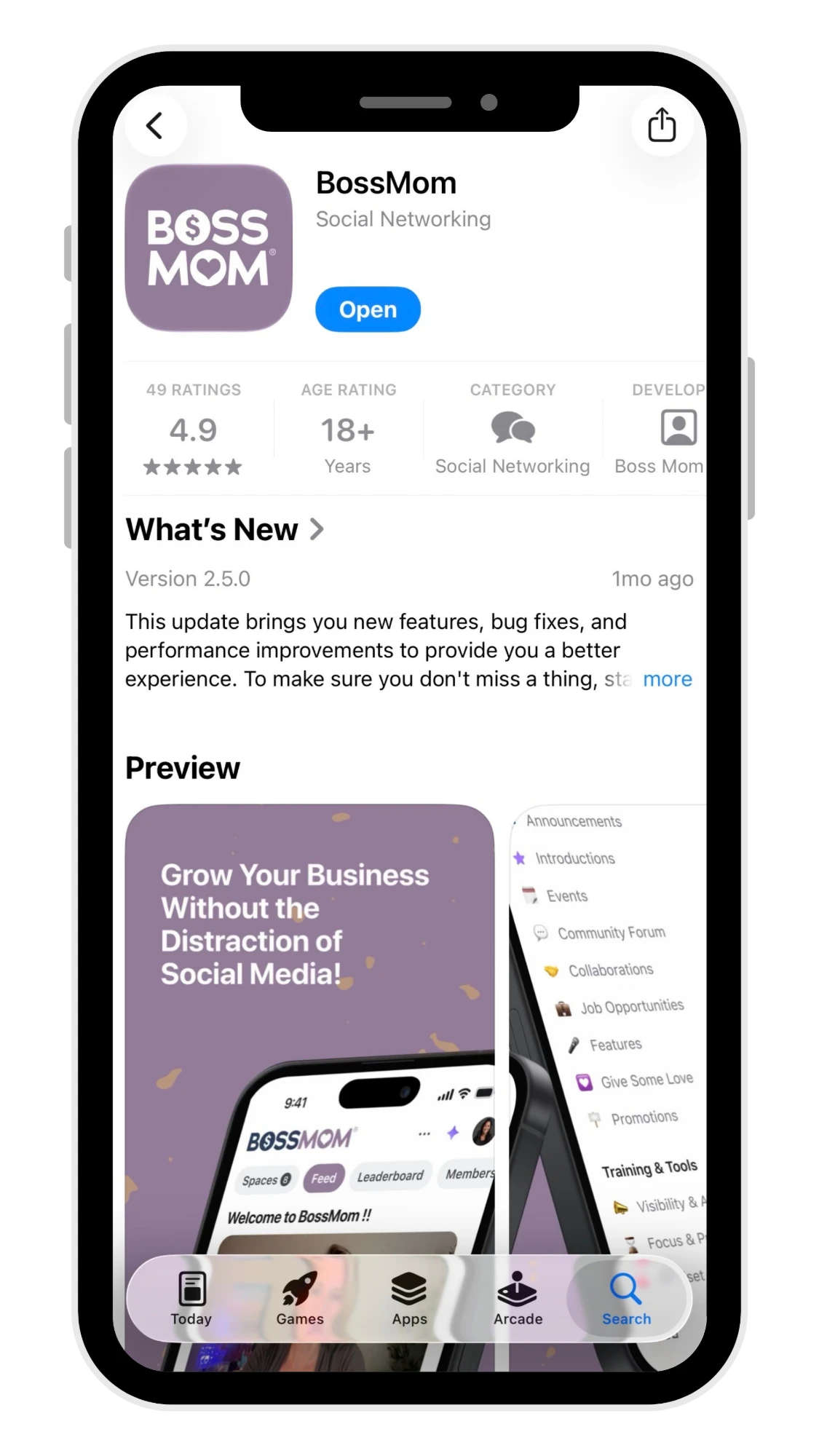
And if you need help creating one or want to join a community that already exists? That’s exactly what BossMom+ is for. We help you validate your ideas, refine your offers, and launch with confidence—because you’re surrounded by women who’ve done it before and understand exactly what works.
Stop launching and hoping. Start building with certainty.
Your people are waiting to tell you exactly what they need. You just have to ask.