Falling down the stairs on purpose saved Michelle Lang’s life

A woman in a flowing gown and heels carefully straps on knee pads, positions herself at the top of a staircase, and deliberately throws herself down the stairs. It sounds absurd. Maybe even reckless. But when you understand why Michelle Lang does this—and what it represents—it becomes one of the most honest conversations about motherhood you’ll ever encounter.
After 12 years away from her career as a professional stunt performer, Lang has returned to throwing herself off buildings, getting hit by cars, and tumbling down staircases. But this isn’t just about revisiting old skills. It’s about what happens when mothers finally get enough mental space to ask themselves a devastating question: “Who am I if I’m not just someone’s mom?”
The Birthday That Changed Everything
On her 42nd birthday, surrounded by successful actors at a fancy Hollywood dinner, Lang felt something break inside her. Despite having everything she thought she wanted—three kids she adored, work she found meaningful—she was deeply, profoundly sad.
The realization hit hard: She had given up on herself.
Lang had been a successful stunt performer, training with the best in the world, playing Bruce Lee’s wife in a 50-episode series. But pregnancy changed everything. You can’t do stunts while pregnant. You can’t get hit by cars while breastfeeding. And somehow, without fully realizing it, she had stopped wanting the things she’d always desperately wanted.
“I found myself needing to hold both equally—wanting to do both and needing to do both because I was really financially on my own,” she explains about her journey as a divorced mom. But somewhere in the chaos of raising three kids under four, producing films, and running a holistic business, the confident daredevil she used to be felt impossibly far away.
When Your Body Forces You to Listen
Sometimes our bodies know we’re in crisis before our minds catch up. For Lang, it took developing guttate psoriasis—a severe rash covering her entire body—to finally force her to stop and listen.
Lying by the pool, “basting her broken body” in sunlight (a treatment recommendation), listening to high-frequency music, she had no choice but to be still. For the first time in over a decade, she couldn’t be in service to everyone else. She couldn’t worry about squished sandwiches in backpacks or laundry piles or runny noses.
That’s when the message came through clearly: “You need to throw yourself down the stairs.”
It sounds dramatic, even comedic. But what Lang understood in that moment was profound: When you’re doing stunts, your only job is to not die. You can’t be distracted by anything else. For those brief moments, you’re forced to be completely present in your own body.
The Permission We Steal From Ourselves
Lang’s first stunt video after her 12-year hiatus went viral. Not because it was technically perfect, but because her genuine joy was impossible to miss. “I am not thinking about posting,” she explains. “I am just genuinely having so much fun.”
The video resonated because it touched something women rarely admit: We don’t just lose track of ourselves in motherhood. We actively deny ourselves permission to exist outside of caregiving.
Lang describes how deeply uncomfortable she felt putting on something sexy again, moving her body in ways that felt “not appropriate for a woman who had three kids.” She had unconsciously created rules about what kind of person she was allowed to be now that she was a mother.
“I think I’d put myself into this like, you need to be a certain way because you have three kids and this is unacceptable behavior,” she admits. The weight of those self-imposed restrictions nearly crushed her.
The Positive Reinforcement Trap
Here’s the insidious part: We get rewarded for sacrificing ourselves. People praise us for being workhorses, for never quitting, for always putting everyone else first. Lang, a self-described perfectionist and highly sensitive person, internalized that feedback and doubled down.
“My only worth was how much I could grind,” she realized. The positive reinforcement kept coming, so she kept grinding harder. Until her body literally broke out in a rash so severe a doctor warned she could die from complications.
She had become a martyr without even realizing it. And martyrdom, while socially celebrated, is actually just slow-motion self-destruction.
What Falling Down Stairs Actually Means
Each stair fall Lang posts—and she’s racked up over 45 million views—is what she calls her “battle cry to myself.” They’re reminders that it’s okay to have fun. That it’s okay to be in her body. That other people’s opinions aren’t worth dying over.
The comments reveal just how much permission women need. People message her saying things feel “freeing” just to watch. They’re inspired not by the physical act, but by what it represents: choosing joy, reclaiming your body, doing something purely for yourself without justification.
But getting to that point required Lang to work through intense guilt. When she traveled to Cabo San Lucas to coach people on social media, she had panic attacks the entire time. She was away from her family. For her own career. It felt selfish.
The breakthrough came when she realized: “If I did anything for myself, I was selfish and thusly something bad would happen.” This belief—one she didn’t even know she held—was running her entire life.
The Difference Between Helping Others and Helping Yourself
Here’s a pattern many mothers will recognize: Lang could leave the house to help other people or produce a film without issue. But doing something for her own dreams? That triggered panic attacks.
We’ve somehow internalized that our labor is valuable only when it serves others. Our time, our bodies, our dreams become acceptable only when filtered through caregiving or supporting someone else’s vision.
It took Lang 12 years to start asking: Where did this belief come from? She had a great role model in her own mother, who ran a dance studio and never dropped her life for kids. So why did Lang feel she had to completely disappear into motherhood?
The answer, she’s discovering, comes from absorbing older narratives—well-meaning comments from other women about how “good moms” always have part of their brain on their kids. Always know where they are, what they’re eating, what they’re doing.
Even with a capable, involved husband, Lang found herself mentally tracking everything. Why? Because she believed she had to. Because that’s what she’d been told good mothers do.
When You Don’t Even Know What You Want
Here’s the painful part many women face: After years of putting everyone else first, you lose track of what you actually want.
When Lang’s husband asked what she wanted for her 42nd birthday, she had no answer. She literally couldn’t think of anything. And then she had this realization: “If I don’t know what I want, how in God’s name is anyone else gonna know what to give me?”
She describes wanting people to “just give me what I want, but I don’t know what I want.” It’s a frustrating cycle. You feel unsupported but can’t articulate what support would look like. You’re resentful that no one helps, but when they offer, you can’t tell them how.
Compare this to someone who knows what brings them joy—they ask for it, receive it gladly, and everyone feels good. But when you’ve spent years ignoring your own preferences, you become terrible to give to. You deflect, minimize, or feel guilty about anything offered.
The Small Acts That Keep Dreams Alive
Lang’s advice for mothers still in the thick of survival mode—those with babies and toddlers who truly don’t have three free hours: Write one note. Buy one flower. Do the smallest version of your dream that you can manage.
Her stair falls themselves are usually accomplished in just a few hours. She doesn’t have unlimited time—she still wants to be hands-on with her kids. But now she’s learned to create pockets of time for something that’s deeply meaningful to her.
“I don’t have to lose myself forever,” she emphasizes. “It’s just this time is a challenge.” There will be seasons when you’re grinding through survival. That’s okay. But you don’t have to completely extinguish every spark of who you are outside of motherhood.
Getting Back Into Your Body
There’s neuroscience behind why physical movement, play, and even falling down stairs helps with nervous system regulation. Swimming, pressure, movement—they all signal safety to our bodies.
But mothers often disconnect from their bodies entirely. We become hypervigilant scanning machines—tracking everyone’s needs, spotting the missing homework under the forgotten sweater in the back closet. We know where everything is except ourselves.
Lang describes being deeply uncomfortable just being in a swimsuit, feeling like her body should only exist for nursing and caregiving. She had to give herself permission to have a body that existed for her own pleasure, movement, and joy.
“I had gotten so far away from being okay feeling what it was like to be in my own skin,” she admits. The guilt around even looking good felt overwhelming—as if appearing anything other than haggard and tired wasn’t allowed for mothers.
The Ripple Effect of Permission
When Lang posts her stair fall videos, the comments divide into two camps. The majority are inspired, grateful, feeling seen. But some are triggered, judgmental, defensive.
That second group is worth paying attention to. Their discomfort reveals the invisible rules they’re living by—rules about what mothers should and shouldn’t do, be, or want.
Lang is deliberately pushing boundaries. She’d rather have five people watch a post where three love it and two hate it than have five people not care at all. The triggered responses show she’s hitting a nerve—and sometimes that’s exactly where healing needs to happen.
“I will not let hate win,” she says simply. And then adds with characteristic honesty: “Now, as I’ve done more and more, it gets easier. But going through that initial phase is really challenging.”
The truth is, we go crazy collectively but heal individually. Every person who watches Lang fall down stairs in a ball gown and thinks “maybe I could reclaim something for myself too” creates another ripple. And another. And another.
What Your Kids Actually Need From You
Here’s what Lang discovered: Her kids love watching their mom play again. They helped create her studio space, their artwork on the walls. They’re not suffering because she takes time for herself. They’re learning.
Children already know what many adults have forgotten: Play is essential. Joy is necessary. And watching the adults in their lives prioritize those things teaches them it’s okay to do the same.
If we don’t model having identities outside of caregiving, we teach our children that their worth comes only from service. We perpetuate the cycle instead of breaking it.
Lang is now working on a podcast called “The One That Glitters” and developing a scripted series for women who need an escape at 4 AM during yet another feeding, another sleepless night. She’s documenting her transformation—including all the messy, struggling parts—because she doesn’t want to romanticize it later.
“I wanted to avoid just having this rosy glass of what that was,” she explains. The podcast captures her real-time processing of hate comments, self-doubt, and the challenge of creating art while mothering.
The Questions Worth Asking
If watching someone in a formal gown throw themselves down stairs for fun triggers something in you—judgment, discomfort, superiority—that reaction is worth examining.
Where is that coming from? What rule are you enforcing? Who made that rule? Does it actually serve you, or are you just enforcing someone else’s script about what mothers should be?
Lang challenges women to get clear on what they actually want, not what sounds good or noble. Not the stock answer about starting an orphanage or saving the world. What do you want to be doing, specifically, in a way where you’d enjoy the actual doing?
Her answer surprised even her: “I actually just wanna put on a pretty dress and fall down the stairs for me.”
It sounds frivolous. It’s not. It’s the most honest thing she’s said in years.
Stop Waiting for Permission
Lang spent years waiting for someone to christen her with her dreams. To give her permission. To validate that she was allowed to want things for herself.
No one came.
So she stopped waiting. She started treating her dreams like planning a trip to Hawaii—you can wish for it all you want, but until you look at flights and book hotels, you’re just wishing. Nothing changes.
“I’m done waiting. I’m done messing around,” she decided. “I’m just gonna have fun and I’m gonna create some stuff.”
The alternative was dying from a rash. But she’s clear: You don’t have to wait for a medical crisis to give yourself permission. You can choose to reclaim yourself right now.
Every stair fall is a reminder that she gets to exist outside of everyone else’s needs. That her body is hers. That joy isn’t selfish. That showing up as a full human—not just a service provider—makes her better at everything else she does.
Including motherhood.
So maybe the question isn’t why would a mother throw herself down stairs in an evening gown. Maybe the question is: What would you do if you finally gave yourself permission to play?
Connect with Michelle Lang
The most powerful takeaway from Michelle’s story? You don’t have to wait for a crisis to reconnect with yourself. Whether it’s falling down stairs for fun or finding joy in something as simple as flowers, make space for what makes you feel alive. And remember, it’s okay to put yourself first sometimes—it doesn’t make you selfish, it makes you human.
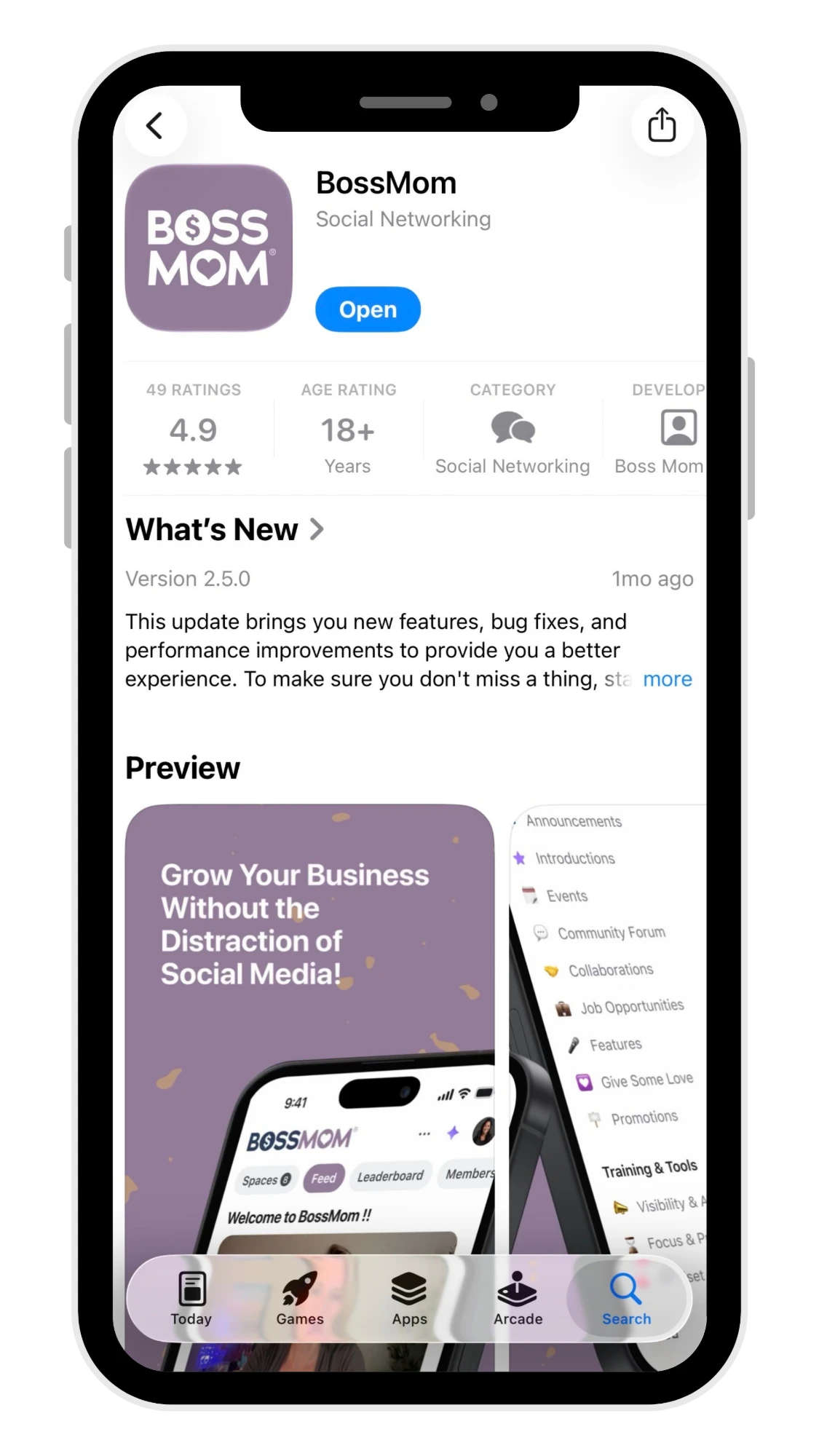
Now, I want to hear from you: what small act of joy can you start today? Drop me a comment, or better yet, join the Boss Mom+ community and share your journey toward reclaiming your joy. Let’s keep this conversation going and break the cycle of self-sacrifice, together.
And don’t forget to check out Michelle’s One That Glitters podcast for more behind-the-scenes fun and stories of reclaiming your life after motherhood. You deserve to be seen and heard—let’s do this together. You may also follow her @themichellelang.