The Truth About Working at Home With Kids

Working at home with kids isn’t the Instagram-worthy laptop-by-the-pool fantasy you signed up for. It’s recording important videos while your toddler yells about their butt from the bathroom. It’s pivoting mid-sentence on a client call because someone just spilled an entire cup of juice. It’s the beautiful, chaotic reality of building something meaningful while raising tiny humans who have zero respect for your calendar.
And yet? It’s also one of the most rewarding things you’ll ever do—if you can let go of what it’s “supposed” to look like and embrace what it actually is.
Here’s what nobody tells you when you’re Googling “how to start a business while working at home with kids” at 2 AM while everyone else is asleep: You’re not failing when things feel messy. You’re just learning to operate in a completely different paradigm than traditional business advice assumes.
The Fantasy vs. The Reality
The fantasy: You’ll work during nap time and after bedtime, seamlessly balancing entrepreneurship and motherhood with color-coded calendars and matching athleisure sets.
The reality: Your four-year-old announces they’ve decided naps are “for babies” the exact week you’re launching something important. Your carefully blocked work time gets hijacked by a school nurse calling about a stomach ache that mysteriously disappears the moment you arrive for pickup. You’re taking Zoom calls with strategic camera angles that hide the laundry mountain behind you.
And you know what? That’s not a bug in your system. That’s just what working at home with kids actually looks like.
The sooner you stop trying to recreate a corporate 9-to-5 structure in an environment with tiny anarchists running around, the sooner you can build something that actually works for your life.
Boundary-Setting When There Are Literally No Doors
Everyone loves to advise “set boundaries between work and family time” as if that’s some revolutionary concept you haven’t already considered. But when you’re working at home with kids, boundaries aren’t about closing an office door and being unavailable. They’re about something much more nuanced.
Real boundaries look like this: Creating “uninterrupted work windows” during school hours or screen time, then being fully present during family time because you know tomorrow has another work window built in.
It’s time blocking with the understanding that blocks might shift. It’s communicating to your kids that “Mommy’s working right now” actually means something—and then honoring family time with the same intensity you bring to client work.
But here’s the part most advice skips: You have to give yourself permission for these boundaries to be imperfect. Some days your five-year-old will respect your work time beautifully. Other days they’ll need you seventeen times in thirty minutes for reasons that make absolutely no sense to adult logic.
The goal isn’t perfect adherence to your schedule. The goal is creating enough structure that work actually happens while maintaining enough flexibility that you don’t lose your mind when plans change.
The Hierarchy of What Actually Matters
There will be days when you have to choose: Finish the email that could land a new client, plan your product launch, or shave your legs for the first time this week.
Welcome to entrepreneurial motherhood, where your priorities shift daily and “having it all together” means something completely different than it used to.
Here’s the uncomfortable truth: Sometimes the business takes priority over the small stuff. Sometimes you show up to record content in a mom bun and yesterday’s sweats because getting it done matters more than looking polished.
And that’s not settling. That’s understanding what moves the needle.
When you’re working at home with kids, you can’t optimize everything. You have to get ruthlessly clear about what actually matters versus what just feels like it should matter because that’s what people with “real” offices do.
Does anyone actually care if you’re wearing makeup on that training video? Or do they care about the value you’re delivering? Does your client need you to have a perfect morning routine? Or do they need you to show up and solve their problem?
Progress beats perfection every single time. And the faster you internalize that, the less exhausted you’ll be trying to maintain impossible standards.
The Power of the Strategic Break
Here’s something that sounds counterintuitive when you’re already stretched thin: Taking breaks isn’t optional. It’s strategic.
Call it a “momcation” if that makes it feel more legitimate. But these aren’t elaborate getaways or spa weekends (though if you can swing those, absolutely do). These are small, intentional pockets of time where you’re not in service to anyone else.
A few hours while the kids are at Grandma’s. A solo coffee run where you sit in your car for an extra ten minutes before going home. An evening where your partner handles bedtime while you take a bath without someone asking you where their favorite socks are.
These breaks aren’t about escape. They’re about returning to both your family and your business with actual energy instead of fumes.
When you’re working at home, the temptation to just keep pushing through is constant. There’s always one more email, one more task, one more thing you could be doing. But operating at maximum capacity with no release valve isn’t sustainable—it’s a recipe for resentment and burnout.
Small breaks allow you to come back as a better version of yourself. Not because you’ve “earned” rest through productivity, but because rest is what makes sustained productivity possible in the first place.
Planning for Growth (While Everything’s Already Growing)
Whether you’re considering adding another child or expanding your business—or both, because apparently some of us are gluttons for punishment—growth requires planning and flexibility in equal measure.
Here’s what actually helps when you’re working at home and everything’s in flux:
Adjust your expectations. Not forever. Just for this season. A growing family or scaling business means temporarily recalibrating what “success” looks like. That doesn’t mean you’re lowering standards. It means you’re being realistic about capacity.
Build your support system. This isn’t admitting defeat—it’s strategic resource allocation. Family help, childcare swaps, business collaborations, hiring support even when it feels too early. Whatever gives you back time and mental space is worth exploring.
Protect the non-negotiables. When everything’s demanding your attention, you need clarity about what actually can’t slip. Maybe that’s your morning workout because it keeps you sane. Maybe it’s date night because your relationship needs tending. Maybe it’s your quarterly business review because without it you’re just busy, not building.
Adding another layer to your life—whether it’s a baby or a new business arm—will feel like learning to juggle all over again. Some days you’ll drop everything. That’s not failure. That’s the learning curve.
When Your Worth Isn’t Measured in Revenue
One of the hardest parts about working at home, especially in the early stages, is explaining your business to people who measure success purely in income.
You’re pouring hours into building something, and the financial returns don’t reflect the value yet. Family members ask pointed questions about when this “hobby” will become profitable. You start doubting whether it’s worth it.
Here’s what shifted for me: My father-in-law watched one of my videos and told me he was impressed with my presence and clarity. That simple acknowledgment reminded me that our worth isn’t just about revenue—it’s about impact, passion, and the unique contribution we’re making.
Yes, profit matters. Yes, you need to build a sustainable business. But in the messy middle of working at home with kids, remember that you’re creating value even before the bank account reflects it. You’re developing skills, building confidence, creating content that helps people, establishing yourself as an expert.
The money will follow if you stay consistent. But if you wait until you’re “making enough” to feel legitimate, you’ll undermine your own progress every single day.
Letting Go of the Perfection Prison
If there’s one mantra every mom working at home needs tattooed somewhere visible, it’s this: Progress, not perfection.
Perfection is a myth. It doesn’t exist in any area of life, but especially not when you’re balancing business ownership with motherhood. Some days feel like wins. Other days, just showing up is enough.
You don’t need everything figured out. Nobody does. The people you admire who look like they have it all together? They’re figuring it out too. They just got comfortable with imperfection faster than you did.
Give yourself permission to be messy. To have days where the business gets all your good energy and your kids watch more TV than you’d like. And days where you’re fully present with your family and work barely gets touched.
You’re not failing when you can’t do everything perfectly. You’re succeeding at being human.
Finding Your Actual Purpose (Not Just What Might Sell)
When you’re starting a business while working at home, it’s tempting to build around what you think will sell rather than what genuinely excites you.
But here’s the thing about sustainable business-building: You need more than market demand. You need the intersection of your passion, your skills, and what people actually need.
That sweet spot is where your work feels purposeful. Where you stay motivated even on the hard days. Where you can authentically show up because you’re not performing—you’re just being yourself while solving problems you care about.
If you’re constantly chasing what’s trendy or what someone else is successfully selling, you’ll burn out before you build momentum. Find what lights you up and figure out how to make it viable. That’s where the magic happens.
The Little Things That Make Everything Easier
When you’re running both a business and a household simultaneously, anything that saves time or mental energy is worth its weight in gold.
This might mean investing in tools that streamline your work. Systems that automate repetitive tasks. Organization solutions that mean you’re not constantly searching for things. Even something as simple as labels that actually stay on through the wash cycle can give you back precious mental bandwidth.
These aren’t indulgences. They’re infrastructure. The less time you spend on logistics, the more energy you have for the work that actually matters.
Why Community Changes the Game
The single biggest differentiator between moms who build successful businesses while working at home and those who burn out trying? Community.
Not just any community—a support system of people who actually get it. Women who understand that “I’ll get that to you by end of day” means “by the time my kids are in bed and I have functioning brain cells again.” Entrepreneurs who don’t judge you for bringing your toddler to a networking event because childcare fell through.
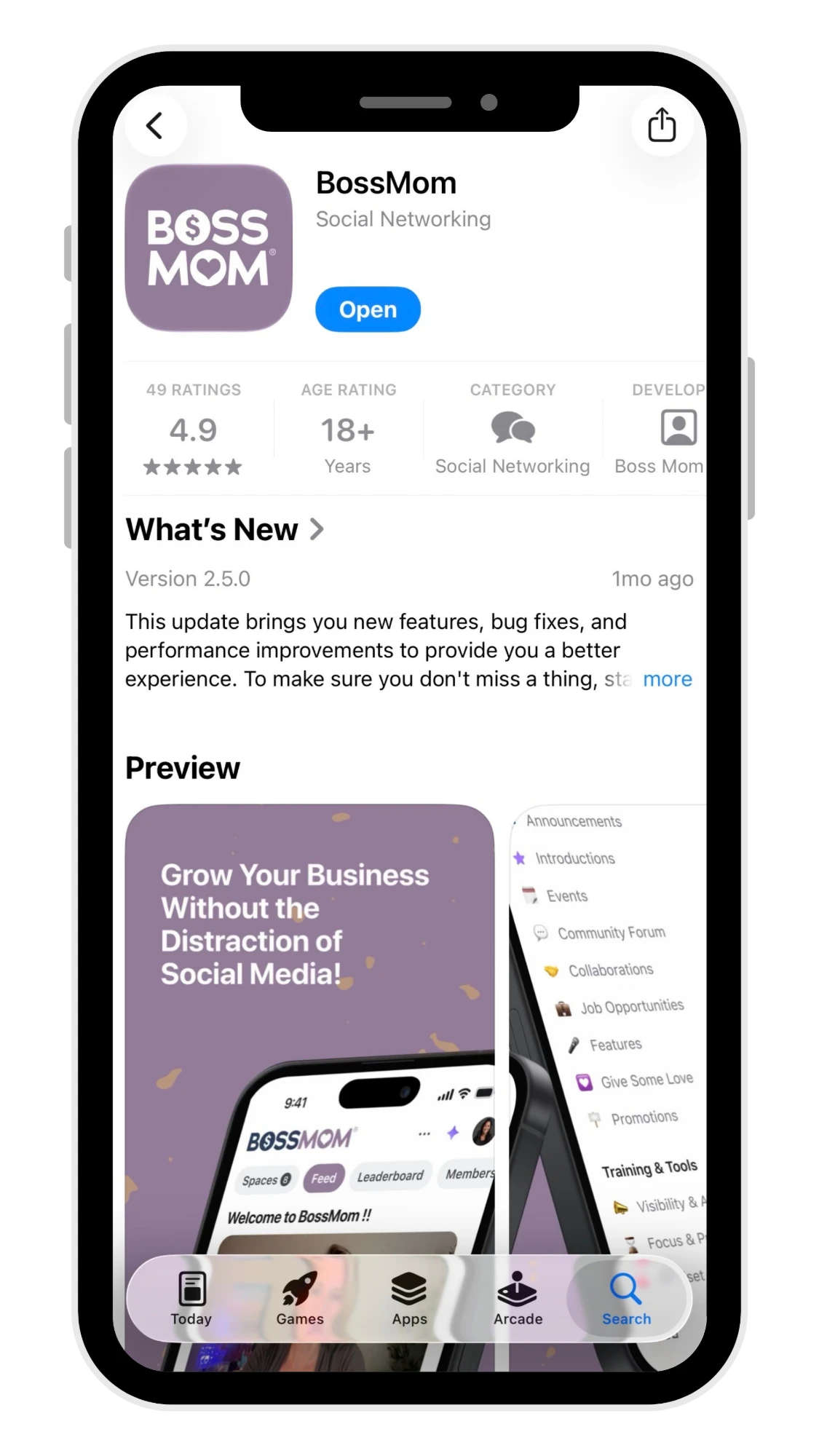
This is why spaces like BossMom+ exist. Not as another thing on your to-do list, but as the strategic support that makes everything else possible.
Inside a real community, you get tailored guidance whether you’re scaling your second business, streamlining your current one, or just trying to figure out how to make work happen between school pickup and dinner chaos. You connect with other B2C moms—parenting coaches, relationship experts, designers, consultants—who are building alongside you.
You access expert mentorship without the gatekeeping. Strategic resources without the overwhelm. Deep-dive workshops that actually apply to your reality. Member-only events where you can ask the questions you’re too embarrassed to Google.
Most importantly, you’re surrounded by women who won’t give you generic advice about “just hiring a VA” or “batching content” without understanding the constraints of working at home with kids. They’ve been where you are. They know what actually works.
The Real Secret Nobody Mentions
Here’s the truth they don’t tell you in those “start your business from home” courses:
The business part is actually the easy part. Coming up with an offer, creating content, making sales—those are all learnable skills with clear pathways.
The hard part? Managing your own mind when you’re operating in isolation, dealing with constant interruptions, and trying to build something significant in the margins of motherhood.
The hard part is not having a team to bounce ideas off. Not having external validation that you’re on the right track. Not having the structure of an office to make work feel “real.”
The hard part is believing you’re building something worthwhile when you’ve sent three emails between making breakfast and breaking up a fight over who gets the blue cup.
That’s why you need more than tactics and strategies. You need mindset support. You need to see other women doing it imperfectly and succeeding anyway. You need permission to build a business that looks nothing like traditional business—and to trust that it can work anyway.
What Working at Home Actually Requires
It’s not about having the perfect setup or the ideal circumstances. It’s about showing up consistently even when it’s messy. It’s about building something meaningful in the small pockets of time you can carve out.
It’s about recognizing that your kids seeing you work on something you care about—even when it’s hard, even when it means sometimes choosing your laptop over playing another round of Candyland—teaches them something valuable about purpose and persistence.
It’s about understanding that you’re not doing it wrong just because it doesn’t look like what you imagined. You’re just doing it your way.
Working at home with kids is challenging. It’s chaotic. Some days it feels impossible.
But it’s also incredibly rewarding. You get to build something yours. You get to be present for the moments that matter. You get to show your children what it looks like to create something from nothing, to pursue dreams alongside responsibilities.
You just have to give yourself permission to do it imperfectly.
And maybe invest in some good noise-canceling headphones for those important calls.