The BossMom Podcast · Motherhood
Motherhood Isn’t a Role. It’s a Creative Force. (with Dr. Gertrude Lyons)

Hey, beautiful boss mom. Pull up a chair.
I read Dr. Gertrude Lyons’ book Rewrite the Mother Code and I wanted to stand up on my kitchen table. I was reading and going “oh. Oh yeah. Oh my gosh, yes.” Because she said out loud the thing I’ve been circling for years at BossMom, just from a completely different door.
Here’s the thing about losing yourself in motherhood: almost every one of us does it. Not because we’re careless, but because the whole cultural setup is built for it. Once you can see the setup, you can stop blaming yourself for falling into it, and that’s the first honest step toward getting yourself back.
About the Guest: Dr. Gertrude Lyons
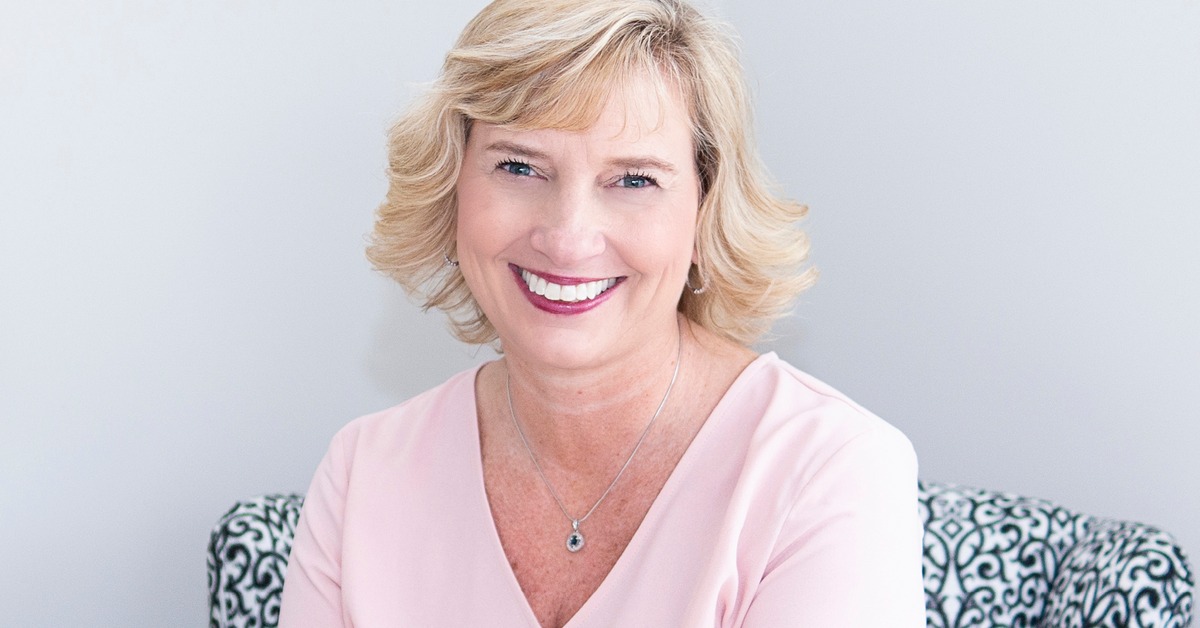
Dr. Gertrude Lyons is a maternal identity expert, TEDx speaker, and the author of Rewrite the Mother Code: From Sacrifice to Stardust. She holds two master’s degrees and a doctorate, and she’s spent nearly three decades coaching women, leading international retreats, and hosting her own top-ranked podcast. Her work has been featured by Oprah Daily, The Wall Street Journal, and The Guardian. She runs self-mothering retreats in Mexico, Ireland, Malta, and Chicago, and 2027 spots are opening soon. Her TEDx talk is a great ten-minute on-ramp if you want a taste before the book.
Motherhood Isn’t a Role. It’s a Force.
The core of Gertrude’s work is this: motherhood isn’t a job title handed to you in a delivery room. It’s a creative force. It shows up in your business, your relationships, your art, your kids, and in how you treat yourself. It’s the same energy that’s underneath everything you have to do to start a business, which is why so many moms find those two things using the same tank.
She found this during her doctoral research, working with women who didn’t have children yet. And she said to them what nobody had said before:
“Really, you’re already mothering. Some of you have businesses. Some of you are in relationship. Some of you have dreams. You’re putting your care in. You’re mothering. And the most important person you need to mother is yourself.” — Dr. Gertrude Lyons
The tears were immediate. These were women who had built interior design firms and run companies as CIOs, and they still believed, somewhere underneath, that they weren’t quite whole yet.
Gertrude is also clear that this energy isn’t gendered. Masculine and feminine values aren’t assigned to bodies. They’re forces. My own brother is proof. His wife has the high-level, logical job. He’s the professor, the one who gets down on the floor and builds the Legos. Watch their house for a week and you’d say he does most of the mothering.
Losing Yourself in Motherhood Isn’t a Failure. It’s a Pattern.
Here’s what I really want you to hear. Gertrude has two master’s degrees, a doctorate, and ran a parenting and family growth division at a coaching organization. She still lost herself in her children.
That’s not a knock on her. That’s the whole point. If someone surrounded by this exact knowledge still went under, then the version of you who’s currently underwater doesn’t need shame. She needs a practice.
I don’t think we can avoid the getting-lost part. When we teach a skill, we’re not teaching “do this once and it lasts forever.” We’re teaching discernment: noticing you’ve drifted before you’re so far off you feel lost in the wilderness. Just far enough to say, “oh. Correction.”
And the catalysts are predictable. Toddlers, the seven-to-twelve stretch, teens, almost empty nest, turning 40, getting married, getting divorced, losing your own mom. Every one is a doorway where you can quietly set yourself down and forget where you put yourself. By the time we notice, the reflex is: I’m too far gone, let’s shove that in the closet and shut the door.
You are not too far gone. You drifted, and drifting is the assignment, not the failure.
The One Answer Almost Every Mom Gives
Inside the BossMom app, when women join, we ask them a few questions. One of them is what your biggest obstacle is right now.
The number one answer, by a landslide, is self-doubt.
The rest of the answers are self-doubt wearing a costume. “I don’t know what to do next” is self-doubt. “I’ve got too much going on” is self-doubt, because with more self-trust you’d set the boundary. “I don’t have the right support system” is self-doubt, because with more self-trust you’d go ask for it.
So I asked Gertrude where that erosion of self-trust actually comes from.
Her answer reframed it for me completely. We live in a very doing, very knowing, knowledge-based culture, and in that culture we got cut off from our intuition. From the internal sense that says ooh, something’s off here without a footnote to back it up.
“We’ve been so trained out of it that it straitjackets us in ways we haven’t fully realized.” — Dr. Gertrude Lyons
You’ve heard the stories. The mom who knows something is wrong with her kid and gets told there’s nothing wrong. And here’s the part Gertrude is careful about, which I love: this isn’t intuition versus science. Held together they’re a beautiful combination. The problem isn’t that we value knowledge. It’s that we stopped valuing the other half at all.
The way back in is through your emotions. Not as drama. As data. Babies do this constantly and effortlessly. We unlearned it, and we can practice our way back.
What Advocating for Yourself Actually Looks Like
When my daughter was two, she had stomach cramps and cried all the time. For a year, the answer at the doctor’s office was that she needed to drink more water. I understand how water works. Then I got told that girls this age are often just dramatic and she was probably fine. From a female doctor. I said, “That’s your medical opinion? That feels like a weird medical opinion.”
A friend recommended a naturopathic doctor. A hundred dollars. He got her on the table and asked, “Did she have a weird birth?” Yes. She came out way too fast, fluid in her lungs, a couple days in the NICU. He said, “She’s got a hiatal hernia,” did the work right there, and gave her homework: hang on the monkey bars as much as you possibly can.
She thought that was the best prescription anyone had ever given a three-year-old. The pain was completely gone.
That’s what advocating is. It isn’t fighting. It isn’t declaring war on doctors. It’s saying, calmly, that answer isn’t good enough for me, so I’m going to keep looking. Erica Hoke told me a version of this story that still gives me chills, going from a 1% chance of pregnancy to a mom of four by refusing to accept the first answer about her own body. I refuse to live in a world where “it is what it is” explains my body, my kid’s body, or my life. And a mom who does that teaches her kids to do it too, mostly by letting them watch.
Kindness Isn’t the Same as Keeping the Peace
Here’s where Gertrude and I got fired up together.
We’re exhausted, so we keep the peace. School taught us to be kind, and somewhere along the way “kind” got translated into don’t say anything out loud that would make anybody uncomfortable.
But the truth is an act of kindness. Not truth as a weapon. Just truth. “Do you like my dress?” “No, I don’t” is an allowed answer. It doesn’t make you cruel. We’ve simply decided to neutralize ourselves.
Gertrude gives her clients an assignment: say no. To everything. Play it all the way up. She’ll tell you she thought the sky would fall. And the hardest part isn’t the no. It’s the not explaining. Not “no, because I have these eighty other things.” Just “no,” and then sitting there in it.
There’s one more form of advocating I think is the most underrated: sometimes advocating for yourself is walking away. Recognizing “this isn’t the room I’m meant to be in” and leaving without a speech. Then going to find the room where your weird phase gets an “of course you are” instead of a raised eyebrow.
“He Knows He’s Enough and I Know I’m Not Too Much”
I have a friend whose kids are grown. She found love again in her mid-fifties, she’s about to turn sixty, and he proposed. At dinner she said this:
“I’m in this space where he knows he’s enough and I know I’m not too much.”
I have been chewing on that sentence for weeks.
Because most moms live on one side of that coin or the other. Half of us feel like we’re not enough. The other half feel like we’re too much (I’m a fast talker with too much energy, I know exactly which side I’m on). Stuck between the two, you don’t know who you are at all, so you float around being a doer, getting your entire sense of value from output.
Which is why so many of the moms I sit down with don’t know how to receive. They believe, deep down, that it has to be earned. That if I do enough doing, then I’ve bought myself the right to just be.
Gertrude told me about a doula who ran into this exactly. Part of doula work is practical: cook a little, tidy a little, so the mom can be with her baby. But in the moments where she just sat and held space so a mother could tell her birth story, she had to work through her own panic. Is she okay with this? I’m not doing anything.
That was the greatest service she could offer. Being with someone tells them their experience is worth being heard.
And here’s why this isn’t soft. Studies keep pointing at the same indicator of thriving: not whether someone is loved, but whether they believe they are worthy of love. That’s the real foundation under raising confident kids, and it starts with us. How are we supposed to hand it to them if we’ve never once felt it about ourselves? If we want to help the next generation, we help moms.
Your Kids Are Watching You Do the Work
A few weeks ago my thirteen-year-old came to me and said, “Mom, I think I have some social anxiety.” He’d watched a video and it described how he feels: he goes along with stuff he doesn’t want to do, he’s scared to say things, he doesn’t want to upset anyone.
So I asked him two questions. Do you want to keep having this feeling? Do you want to work on it together? He said yes. I told him I’d build us an exercise and do it alongside him, because I have my own version of this.
I pulled in some therapist friends and we built it. It’s essentially: who do you want to be? Because if you’re solid on that, you can catch the moment where you go, “wait, that doesn’t match.”
And they are watching, all of it, way more closely than we think. My own kids have told me what it’s actually like having a work from home mom, and the parts that stuck with them were never the parts I would have guessed.
We did it laying on my bed right before he left on vacation with his dad, and the honesty was unreal. At one point he asked, “Can I make honesty just half?” I said, why would you want to be half honest? He said, “I feel comfortable being honest with you, but there are people I don’t feel comfortable being honest with. They’ll tell me I’m just a kid and I don’t know.”
That he could say that out loud to me is the whole lottery. I could easily have ended up with a twenty-year-old who never told me anything, because all I ever did was ask what’s wrong with you, why can’t you.
And it isn’t theory. If I hadn’t done my own inner work, the trajectory of his life could look different. Because I don’t try to be perfect and I love myself anyway, he doesn’t have to be perfect to be lovable. Two or three generations from now, that’s what breaks the pattern.
When You Catch Yourself Judging Another Mom, Ask Why
One more, because I use this constantly.
There’s a group of women I know, all my age, all successful, and I caught myself thinking I don’t want to be in that room. Old me would have quietly decided I didn’t like them. Instead I asked why. It wasn’t jealousy. Their room is about growing a business, and what I actually want now is think-tanking. Within a week I’d reached out to five people I don’t even know to say, “I love the way your brain works, let’s hop on a call.”
That’s the opportunity moms are missing. Not the judging. The why am I judging this part. It’s also how we get moms on the same team, because a solid sense of self means you stop needing to find something wrong with the woman who’s doing well.
Your Next Step
If this one hit something in you:
- Get Gertrude’s book, Rewrite the Mother Code. The whole framework, and it’s genuinely beautiful.
- Watch her TEDx talk if you want the ten-minute version first.
- Look at her 2027 self-mothering retreats if you’re craving real time away with real facilitation.
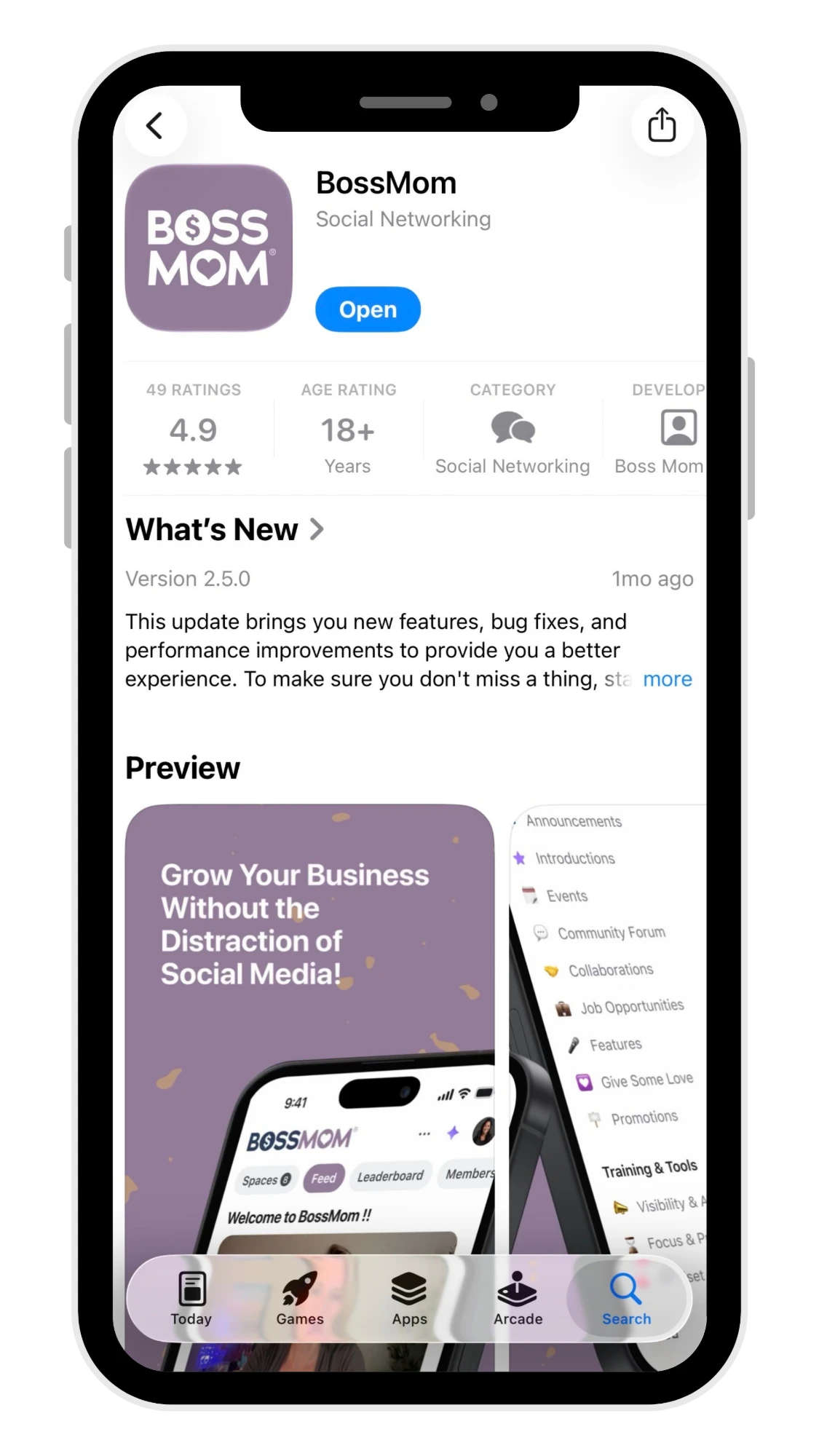
Then come into the free BossMom Community. This isn’t just a place to hang out. This is where we actively help you figure out what you actually want to focus on, what your real goals are, and how to come back to yourself in the middle of motherhood. Because when you have limited time, limited space, and constant distraction, you have to build different skills and do business a different way to actually thrive. Inside you get free networking events, mindset workshops, our daily mindset audios, real connection with other members, and a lot more. It has its own dedicated app, so it’s completely off social media. And it’s free.
When you’re ready to level up, BossMom+ is where you go. That’s where we build out the right marketing plan for your business and give you the ongoing support to actually implement it, so you hit your financial goals instead of circling them.
And tell me a story. Come into the community after you listen and tell me which part landed, or tell me about the room you’ve been sitting in that you already know you’re not meant to be in. I read them all.
You’re not too far gone, mama. You drifted. Correction is a skill, and you can learn it.
I’ll see you next week.
xo, Dana