The BossMom Podcast · Business Mastery
“Thank God I Started When I Did” (with Brenna McGowan)
Hey, beautiful boss mom.
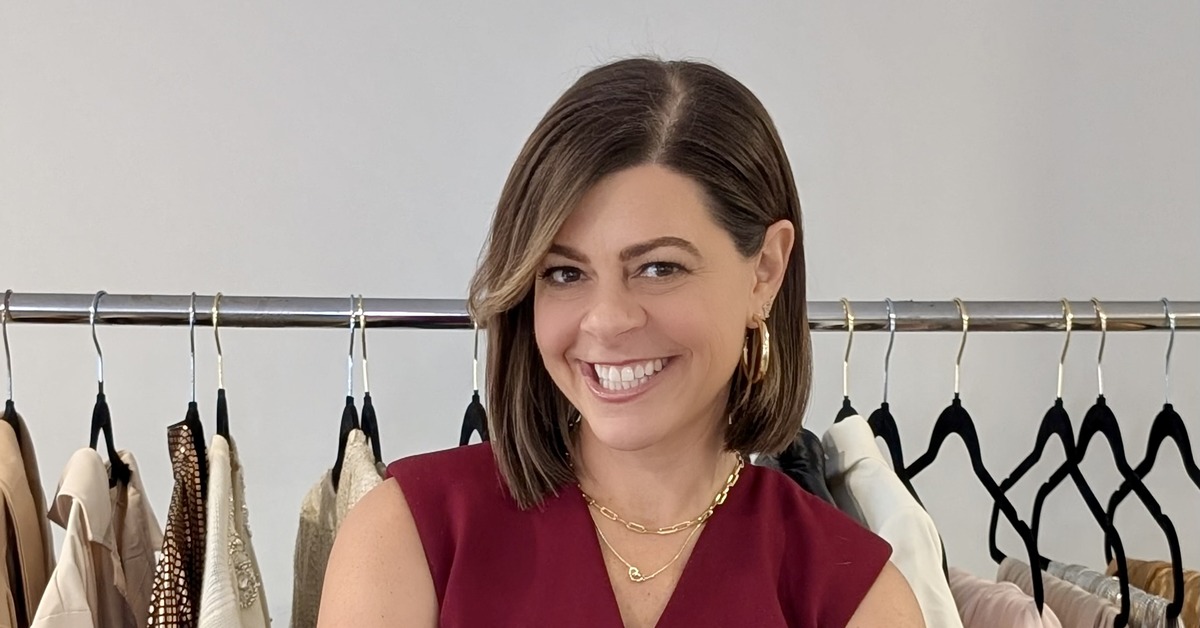
Brenna McGowan came back on the show this week, and we went somewhere she has genuinely never gone publicly. Not a launch breakdown. Not a funnel teardown. A realization she had recently, in a house that has gotten a lot quieter, about a decision she made eight years ago. It’s the single best argument I have ever heard for starting a business as a mom before you feel remotely ready.
She said it almost offhand on Voxer. I immediately said, “Would you be willing to say that out loud on a podcast?”
Here’s the line: thank God I started my business when I started my business. Because she had no idea what was coming.
Let’s get into it.
About the Guest: Brenna McGowan
Brenna McGowan is a launch strategist and copywriter who helps coaches, course creators, and consultants build demand before they sell using her signature Anticipation Marketing® and strategic pre-launch framework. Through her Pre-Launch Plan Program, clients have generated multiple six-figure launches, tripled revenue, and sold out offers before cart even opened.
She’s also the creator of Behind the Launch, and she started all of it at 40, after more than a decade at home with her kids.
“I Had No Idea What Was Coming”
Brenna started her business in 2018. She was 40. Her youngest was 10.
Before that, she was home. For years. Her whole identity was mom. Volunteering, pickups, lunches, homework, the whole architecture of a life built around people who need you constantly.
Then she blinked and her kids were 16 and driving.
“All of a sudden they just don’t need you as much anymore. They definitely need you financially, and there are times. But it’s not that day to day, I gotta make lunches and pick them up from school. That started to go away, and all of a sudden I was left to myself.” — Brenna
And here’s the part I want every mom reading this to sit with. She said having the business has been a godsend, and she didn’t even realize it at the time.
She spent years feeling guilty about it. Should I be working? Should I be doing this for myself? The kids are only going to be this age for so long. That guilt was loud. And it turns out it was guarding a door she desperately needed to have already walked through.
You are not building a business for the mom you are today. You’re building it for the mom you’re going to be when the house gets quiet.
The Middle Space Nobody Has Named Yet
Now, I want to be careful here, because this isn’t a story about outsourcing your motherhood so you can go be a CEO.
Brenna and I are both still deeply, unapologetically in it. I have friends who say, “I don’t want to drive my kids to school, I hire someone for that.” No judgment. Moms build wildly different setups and some of the best ones look nothing like mine, all the way out to the moms who’ve built their whole days around homeschooling. But that’s not me. I like driving my kids to school. I get the slang. I get the gossip. I’m the one going, “You want me to drive your friends home? Because I want to hear what you guys are talking about.”
I don’t travel much. People tell me, “Let’s get you on stages this year.” Nope. I want to be at sports games. I want to be here before and after school. We have Tuesday movies. I’m not missing those.
And I still work eight and nine hour days. In the in-between.
That’s the space nobody has properly named. It isn’t “I have a job and then I come home to my kids.” It also isn’t “my only job is my kids and then I play pickleball while they’re at school.” It’s a third thing. We’re seasonal. We work less in summer. We move a launch because it’s playoffs.
And Brenna made the point that it doesn’t stop when they grow up. Her middle is in college. Her son just moved and she took half a day to help. Her youngest had a doctor’s appointment. The responsibilities don’t disappear, they just change shape.
Who Decided Moms Weren’t Allowed to Want More?
I hear this on BossMom networking calls constantly, and it wrecks me every time:
“I feel guilty for desiring more. I want something for myself. I want to make money. I have a big dream. And I feel guilty for the dream.”
What happened culturally where women decided that caring about your kids and wanting to achieve something huge are mutually exclusive? Who wrote that? Because I’d like a word.
Brenna’s reframe on this was the thing I keep coming back to. She said the cool part is that we get to reshape it.
“I’m so happy I started my business when my kids were younger and in school, and got to see me, not perfectly, but got to see me navigate: okay, I’m going to have this really cool thing for myself while I also take really great care of them. And that we can really live in both.” — Brenna
Not balance. Both. Watched by your kids in real time.
What Starting a Business as a Mom Actually Looks Like on Day One
Here’s what I love about Brenna’s origin story, because it demolishes the myth that you have to know you want to be Oprah before you’re allowed to begin.
She was turning 40. She was working part-time as someone’s assistant, and she remembers thinking, am I just going to be someone’s assistant for the rest of my life? Then they cut her hours.
So she needed to make $500 extra a month. For the electric bill. And so she could get Botox without asking her husband for money.
That’s it. That’s the origin story of a business that now runs multiple six-figure launches.
“I literally started a business I had no business starting. I became a social media manager as someone who had never been on social media personally.” — Brenna
No degree. Never spoken publicly. Not on social media. None of the qualifications any of us think we need. (If that’s the exact thing you’re stuck on, I’ve broken down what you actually have to do to start a business, and the list is shorter than the one in your head.)
My version was the same. I just needed to make enough money to send my son to daycare, because I wanted him around other kids and I am not built for standing in a park with other moms while everyone yells. That was the whole business plan.
We all start before we know. That’s not a bug. That’s the entry fee.
Never Charge Your Worth
Okay. This is the part I want tattooed somewhere.
There was a movement, and it’s been running for years now, that pulled a huge wave of moms into virtual assistant work and freelancing and told them: demand this hourly rate, because you’re worth it. Charge your worth.
I think it did real damage.
Because on day one, you are not an expert. You’re an apprentice. You are an intern in your own business. And that is fine. That’s how every single one of us who’s still standing got here. But we told a generation of moms that if they weren’t asking for $50 an hour immediately, they weren’t honoring their value. So they went out and asked, and they got no after no after no, because the person on the other side genuinely did not have $50 an hour for that task.
And those moms didn’t conclude “my pricing was early.” They concluded “nobody wants me. I’m not worth it.”
What a terrible thing to do to somebody who just worked up the courage to start.
Here’s the flip, and it’s the most important thing in this episode: your worth and your price have nothing to do with each other. Your worth is intrinsic. It doesn’t move when a launch flops or a post dies or a client says no. Charge the value of what you provide. Never charge your worth, because your worth was never for sale.
Be Your Own Paid Intern
Brenna’s framing for that early season is perfect:
“My mindset at the beginning was, I’m my own paid intern.” — Brenna
She got clients immediately, then realized she had gaps, so she taught herself. Books, the library, whatever she could find online. She figures she made about a dollar an hour that first stretch.
And then something happened that I want you to watch for, because it’s the whole game: she’d finish a project and think, this was a ton of work and these people got an incredible deal. Next time I quote this, I quote it higher.
That’s the internal signal. Not a blog post telling you your rate. Not a course telling you your worth. A felt sense of this is no longer an even trade, earned through reps.
Her first Pre-Launch Plan Program launch was, by her own account, way underpriced. Twelve or thirteen thousand dollars. And she went in thinking: if this covers my expenses for a couple months and I get the thing built, it was worth it.
She’s doing the same thing right now, scaling from a cohort model to evergreen, testing a new webinar. Her bar: if one person buys, I now have a whole system I can test.
This is also the argument for testing with actual humans instead of guessing at scale. Market research groups are your business’s secret weapon for exactly this reason: a handful of real people telling you the truth beats a big polished launch built on assumptions.
This is Hormozi’s line about doing unscalable things so they can be scalable later, and it’s also something more specific for us. When you get your hands filthy in the actual work, you find your spin on it. That spin is your IP. That’s the part nobody can copy and the part all the money lives in.
Why the Big Launch Model Breaks Moms
I have tried the old-school way more times than I want to admit. Months of prep. Ads. The big seven-figure crescendo.
It doesn’t work for me. And I finally understand that it doesn’t fail because I’m bad at it. It fails because it requires something moms aren’t willing to give.
So I never go all in. I miss deadlines. I burn out. I start resenting the thing. And that energy is loud. The whole world can feel it. Then it flops, and I take the flop personally.
What Brenna described instead is the model that actually fits us: build it, sell it, build it better, sell it again, grow it, keep going. No crescendo. Compounding.
She paired it with something that made me sit back:
“You almost have to be a little unattached from the results. It’s incredibly hard to do. But then I don’t mentally wreck myself if something doesn’t work out the way I planned.” — Brenna
We talked about it like dating, because we always end up there. Not hard to get in the sense of not wanting the sale. Hard to get in the sense of: I have something great, you should want it, and if you don’t, we’re good. That energy pulls people toward you. Desperation pushes them off.
It’s secure attachment applied to a business. If you decide this launch is the only way money can come to you, you’ve built a funnel with one opening and told the universe to squeeze through it.
And here’s my honest question, the one I don’t have an answer for: is that detachment earned, or can it be taught? Do you have to fall in love and get flattened a few times first? Because the letting-go Brenna is describing sits on top of self-love, self-security, and knowing you’ll be okay no matter what. That’s not a marketing skill. That’s inner work.
Brenna thinks conversations like this one shorten the runway. I hope she’s right.
The Stories You’ve Been Handed
She also said something about the empty nest that I think applies to almost everything.
The empty nesting itself wasn’t the hard part. The lead-up was. Because for years, people had been narrating it at her. You only get 18 years. This is her last summer. This is his senior year.
“I had this thought, like, oh, the only way is to be really sad about this.” — Brenna
She still had to walk through it, and she did feel sad. But she named the trap: you can stop and ask whether the thing you’re bracing for is actually true, or whether you’re living out a story someone else handed you. And it’s subtle. It’s hard to even catch.
I did this with hypnobirthing. Everyone kept telling me to be ready for a C-section, to plan for it, to prepare for the pain. I said no. I’m not putting that out ahead of me. I’ll stay flexible if something changes, but I’m not pre-living it.
And now everyone’s favorite thing to tell me is that my 11-year-old daughter is about to become impossible. That it’s going to get so hard. That she’ll be emotional and awful and tell me she hates me.
Don’t put that on me. She’s going to be a human being with a full range of emotions. That is not the same as prophecy. What people are actually doing is handing me the results of their generation, built in a world where moms sacrificed themselves silently and nobody talked to their kids about money or feelings the way we do now.
Different world. Different outcome available.
Nobody Shows You the Hard Part (So We Will)
The other half of self-acceptance is this: you’re allowed to feel the hard feelings while you’re telling yourself a different story. Both. No shame attached.
Brenna had a genuinely rough stretch leading into the empty nest. And her point was that going online and scrolling everyone’s highlight reel, where every business is thriving and everyone has it together, makes the rough stretch feel like a personal failure instead of a season.
I went to mail something last week at a Hallmark store that also has a USPS counter. Fully stocked, open, normal. I went back and it was an empty square. Gone inside a week. No warning, no “hey guys, we’re struggling, come support us.” They were a business until the day they weren’t.
Nobody shows you that part.
So I’ll show you mine. When my dad died, I refused to acknowledge it, and I was the salesperson telling people I don’t think now is the right time for you to join the program. I tanked my business. I ended up in a one-bedroom apartment sleeping on a daybed so my kids could have the room. Two months later the pandemic hit and I had a four-year-old and a six-year-old in 800 square feet with no school and a desk in the nook next to the kitchen.
And that same year I launched the Nurture to Convert Vault, made really good money, and got out of debt.
Both of those things are true. That’s the whole point. Everybody’s life is messy. The honesty is what makes the rest of it survivable.
The Real Takeaway
If you’re sitting there wondering whether it’s selfish to want this, whether you’re too late, whether you’re qualified, whether you should wait until the kids are older:
Start now. Start scrappy. Start as your own paid intern. Charge what the work is worth today and raise it when your gut says the trade stopped being even. Build it, sell it, make it better, sell it again. Stay a little unattached. Let your kids watch you do it imperfectly.
Because one day the lunches stop and the pickups stop and the house gets quiet, and you are going to be so glad you have something of your own already standing.
Thank God you started when you did.
Your Next Step
If this one hit, here’s where to go:
Go follow Brenna. She’s on Instagram, and her Behind the Launch community on Facebook is where she’s teaching this stuff in real time. Her Pre-Launch Plan Program is for you if you have something to sell and you’re tired of the panic-launch model.
And grab Brenna’s launch calendar tool. She built it specifically for the BossMom audience. If you have something to sell this year and you’ve been staring at a blank calendar wondering when to start talking about it, this is the shortcut.
(Heads up: that’s an affiliate link, which means I earn a small commission if you buy. I only ever share things I’d send you to anyway.)
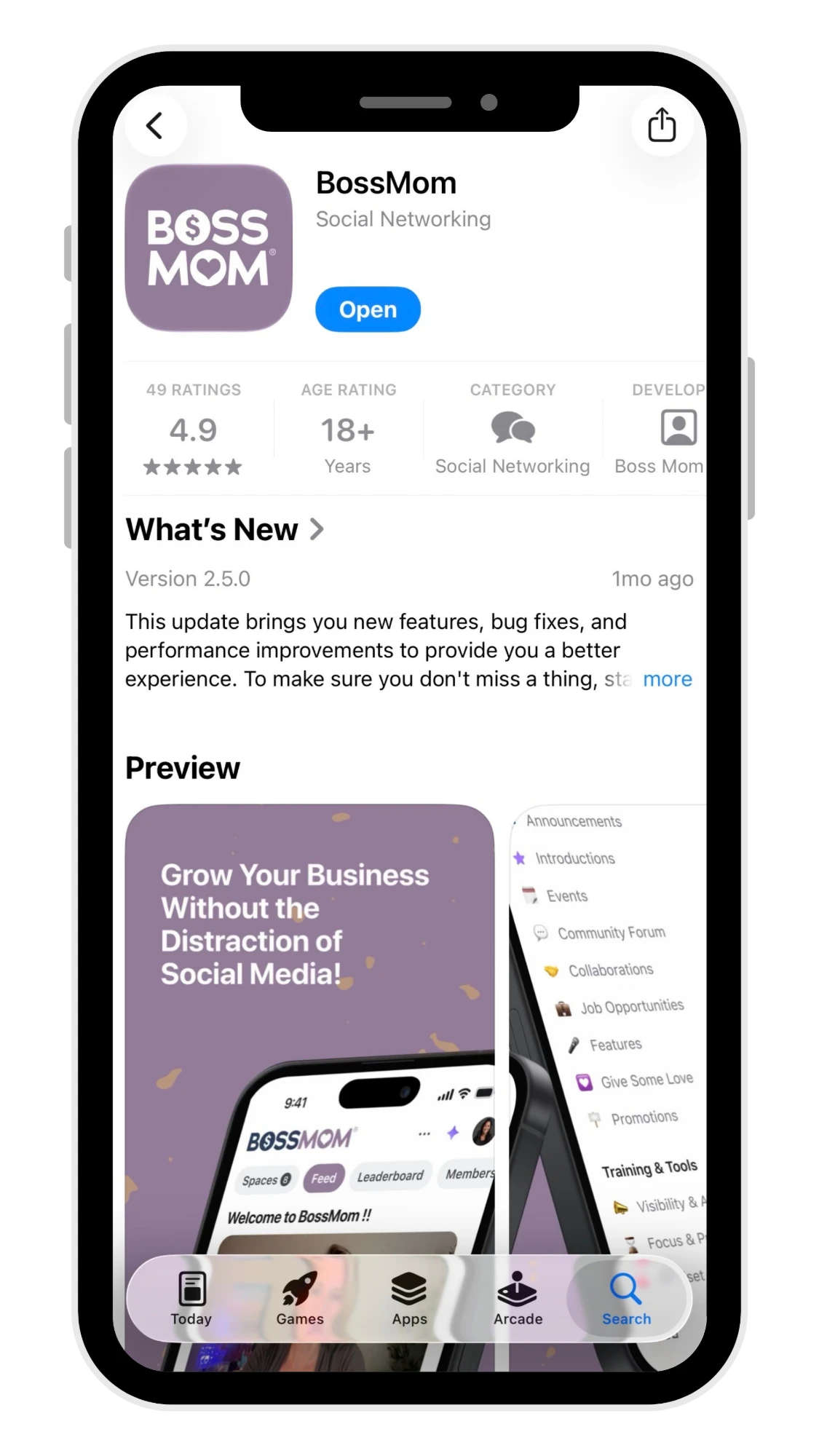
Come into the free BossMom community. This is where we help you figure out what you actually want, what you’re focusing on, and how to build a business that fits the life you’re already living. When you have limited time, limited space, and constant interruption, you have to do business differently to thrive. Inside you get free networking events, mindset workshops, our daily mindset audios, real connection with other members, and its own dedicated app so it’s completely off social media. It’s free. Come hang out.
When you’re ready to level up, BossMom+ is where you go. That’s where we build the right marketing plan for your business and give you the ongoing support to actually implement it and hit your financial goals.
And tell me a story. DM me inside the community after you listen and tell me what you’re glad you started. I read every one.
I’ll see you next week.
xo, Dana